
Key takeaways
Thresholds are frozen: the £325,000 nil-rate band and £175,000 residence nil-rate band will not rise until April 2031, so more estates will pay.
Gifts can leave the estate: most lifetime gifts become free of inheritance tax if the giver survives seven years.
Some gifts are exempt at once: the £3,000 annual exemption, small gifts, wedding gifts and regular gifts from surplus income escape immediately.
Taper relief is often misunderstood: it reduces the tax on a gift, not its value, and only helps where gifts exceed the nil-rate band.
Trusts trade tax for control: gifts into most trusts above £325,000 are taxed at 20% immediately, but let the giver decide how and when money is used.
Pensions change the order of spending: from April 2027, unused pension funds will count towards the estate.
Introduction
For many families, inheritance tax is the tax they think about least and pay most reluctantly. It falls at a moment of grief, at a rate of 40% on everything above the tax-free threshold, and it is increasingly paid by households who would never have thought of themselves as wealthy.¹ Rising house prices, frozen allowances and a change that brings most pensions into the estate have widened its reach.
The good news is that inheritance tax is, to an unusual degree, a tax that can be planned for. The thresholds will stay frozen until April 2031,² and from April 2027 most unused pension funds will count towards the estate.³ Against that backdrop, giving during one’s lifetime has rarely mattered more. What follows explains the rules on gifts, the 7-year clock and the role of trusts.
Who should be thinking about inheritance tax
Inheritance tax planning is no longer only for the very wealthy. It is worth reviewing if any of the following applies:
- Homeowners in high-value areas: property alone can take an estate over the thresholds.
- Those with large pension funds: from April 2027 these will usually form part of the estate.
- Business owners and farmers: 100% relief now applies only to the first £2.5 million of qualifying assets.
- Estates above £2 million: the residence nil-rate band is gradually withdrawn above this level.
- Couples on second marriages: where wills, children and allowances need careful co-ordination.
The common thread is wealth that has grown faster than the allowances meant to shelter it.
The allowances: what passes tax-free
Everyone has a nil-rate band of £325,000. A further residence nil-rate band of up to £175,000 applies when a home passes to children or grandchildren, so an individual can leave up to £500,000 free of tax.¹ Anything left to a spouse or civil partner is exempt, and any unused threshold passes to the survivor, so a married couple can leave up to £1 million.¹ Above that, tax is charged at 40%, or 36% if at least 10% of the net estate goes to charity.¹
Two caveats matter for larger estates. The residence nil-rate band is withdrawn by £1 for every £2 that an estate exceeds £2 million. And business and agricultural property now attracts 100% relief only on the first £2.5 million, with 50% relief above that.⁴ For many families the realistic aim is not to eliminate the tax, but to reduce the part of the estate exposed to it.
The 7-year rule and taper relief
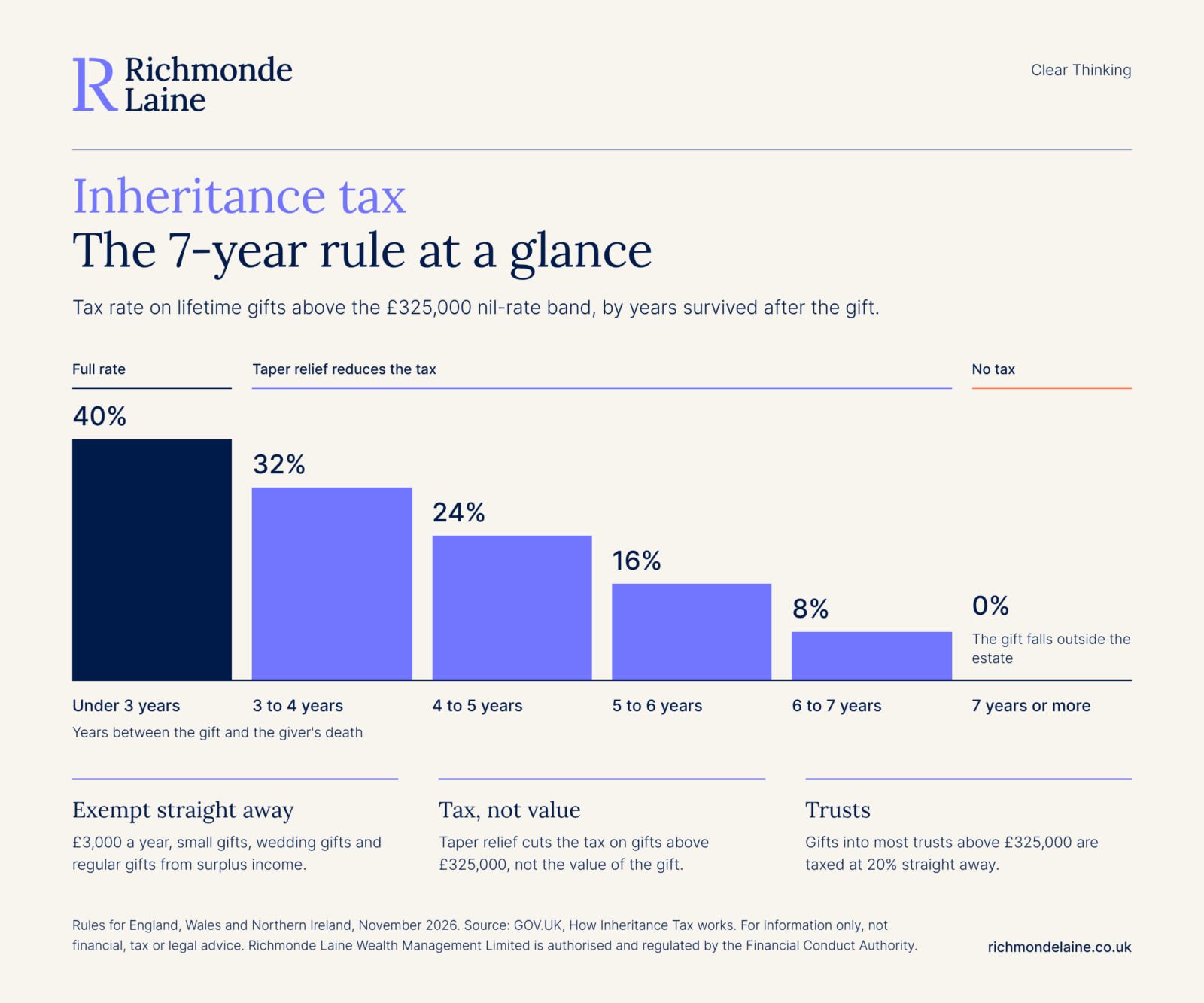
Most gifts to individuals are ‘potentially exempt transfers’. If the giver lives for seven years after making them, they fall out of the estate entirely; if not, they are added back.⁵ Gifts made in the seven years before death use up the nil-rate band first, in the order they were made, which can leave less shelter for the rest of the estate.
Taper relief is often misunderstood. It does not reduce the value of a gift; it reduces the tax on it, and only where gifts made in the seven years before death exceed £325,000. The rate on the excess falls from 40% for deaths within three years to 32%, 24%, 16% and 8% in each following year, reaching nothing after seven.⁵ For most people the real value of the rule is simpler: the clock starts on the day of the gift. Starting early, and keeping records, matters more than any calculation.
Gifts that are exempt straight away
Some gifts never enter the calculation at all.⁵
- Annual exemption: £3,000 a year, with one year’s unused allowance carried forward.
- Small gifts: up to £250 per person per year, to any number of people, provided no other exemption is used on them.
- Wedding gifts: £5,000 to a child, £2,500 to a grandchild and £1,000 to anyone else.
- Regular gifts from income: unlimited, provided they come from surplus income and leave the giver’s standard of living intact.
The last is the most powerful and the least used. Paying a grandchild’s school fees, or funding a child’s pension, from surplus income can move substantial sums out of the estate immediately. It relies on good records showing a regular pattern of giving and genuine surplus.
Using trusts
Trusts allow wealth to leave the estate without leaving the family’s control. The person creating the trust chooses the trustees and sets out how money may be used, which is valuable where beneficiaries are young, vulnerable or newly married.
That control comes at a price. Gifts into most trusts are taxed straight away: the amount above £325,000, after counting chargeable gifts in the previous seven years, is taxed at 20%.⁶ The trust then faces a charge on each 10-year anniversary and exit charges of up to 6% when assets leave.⁶ If the settlor dies within seven years, the gift is reassessed at 40%, with credit for tax already paid.⁶
In practice, many families settle up to the nil-rate band every seven years, so that no entry charge arises. Business owners can also place qualifying shares into trust within the £2.5 million relief allowance.⁴
Traps to avoid
Four mistakes recur.
- Gifts with reservation: giving something away while continuing to benefit from it, such as a home you still live in rent-free, means it still counts towards your estate.⁵
- Capital gains tax: gifts of assets other than cash are treated as sales at market value, so giving away shares or property can trigger a tax bill now.
- Affordability: a gift cannot be taken back. Cashflow modelling can show how much you can give without putting your own security at risk.
- Pensions: from April 2027, unused pension funds will usually form part of the estate,³ so the habit of spending other assets first and preserving the pension needs re-examining.
Generosity, planned
Inheritance tax rewards those who plan early and record carefully. The 7-year clock favours gifts made sooner rather than later; the exemptions reward regular, modest giving; and trusts allow larger sums to move while keeping a guiding hand on how they are used. None of this should come at the expense of one’s own security. The right amount to give is the amount you can comfortably live without, and working that out is where good planning begins.

This article is for general information only and is not financial, tax or legal advice. Figures reflect the rules in force on 03 November 2026 and may change.
Gifts to individuals are free of inheritance tax if you live for seven years after making them. If you die sooner, they are added back to your estate, with taper relief available on any tax after three years.⁵
£3,000 under the annual exemption, plus any unused allowance from the previous year. You can also make small gifts of up to £250 to other people, wedding gifts and unlimited regular gifts from surplus income.⁵
No. It reduces the tax payable on gifts above the nil-rate band if you die between three and seven years after making them. Gifts within the nil-rate band gain nothing from taper relief.
Not effectively. Unless you pay a full market rent, the house remains in your estate as a gift with reservation.⁵
Regular gifts, paid from income rather than capital, that leave you enough to maintain your usual standard of living. Records of your income, spending and the gifts themselves are essential.
They can reduce it, but gifts into most trusts above the nil-rate band are taxed at 20% immediately, and the trust may face 10-yearly charges and exit charges of up to 6%.⁶
From 6 April 2027, most unused pension funds and death benefits will count towards your estate. Pensions left to a spouse or civil partner remain exempt.³
The date, amount and recipient of every gift, and which exemption you relied on. For gifts from income, keep evidence of your income and spending each year. Your executors will need it.
Sources & Notes
1. GOV.UK, How Inheritance Tax works: overview.
2. Macfarlanes, The Autumn Budget 2026, 28 October 2026.
3. HMRC, Inheritance Tax on pensions: technical note, updated 29 May 2026.
4. Ross Martin, Business Property Relief: at a glance.
5. GOV.UK, How Inheritance Tax works: rules on giving gifts.
6. GOV.UK, Trusts and Inheritance Tax.